Power cables with extruded insulation and their accessories for rated voltages from 1 kV (Um = 1,2 kV) up to 30 kV (Um = 36 kV)
IEC 60502 is a core set of standards published by the International Electrotechnical Commission (IEC) for extruded insulation power cables and their accessories with rated voltages from 1 kV to 30 kV. It provides unified technical specifications for the design, construction, and testing of power cables widely used in distribution networks and industrial installations.
1. Structure and Voltage Levels
The IEC 60502 standard is primarily divided into two parts based on voltage, clearly defining their scope of application:
- IEC 60502-1 (Low Voltage Range): Applicable to cables with rated voltages of 1 kV (Um = 1,2 kV) and 3 kV (Um = 3,6 kV) . This part covers common low-voltage distribution cables and includes requirements for cables with special characteristics such as flame retardance, low smoke emission, and halogen-free materials.
- IEC 60502-2 (Medium Voltage Range): Applicable to cables with rated voltages from 6 kV (Um = 7,2 kV) up to 30 kV (Um = 36 kV) . This part focuses on medium voltage networks, imposing stricter requirements on insulation thickness, screening layers, and water-blocking constructions.
2.Key Technical Content and Scope
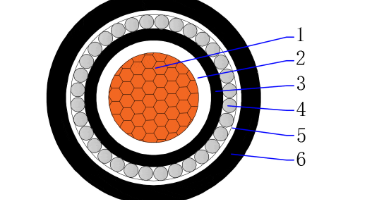
The standard defines the construction and dimensions of conductors, insulation, metallic screens, and non-metallic sheaths, as well as specifies requirements for routine tests, sample tests, and type tests.
Application Scope:
- Application scenarios: Fixed installations in distribution networks, industrial plants, or similar facilities.
- Insulation materials: Primarily thermosetting materials (e.g., cross-linked polyethylene – XLPE) and thermoplastic materials (e.g., PVC) – i.e., solid extruded insulation types.
Special Considerations:
- Water resistance (key for MV): IEC 60502-2 gives particular attention to the risk of radial and longitudinal water ingress. It includes requirements for the design and testing of barriers that prevent longitudinal water propagation.
- DC applications: In the 1 kV part, the standard explicitly allows such cables to be used in specific DC power distribution systems (e.g., ≤750 V to earth or ≤1500 V between poles) if declared by the manufacturer.
- Exclusions: The standard does not apply to special installations such as overhead lines, mining, nuclear power plant containment areas, submarine, or shipboard cables.
3.Latest Revisions and Updates
IEC 60502 is regularly updated to reflect technological progress. As of 2024–2025, the most recent developments focus on the update to IEC 60502-2:
- Latest version: IEC 60502-2:2014+AMD1:2024 CSV (published in May 2024).
- Key technical changes: This significant revision introduces several important updates, including:
- Simplified calculation procedures for lead sheath and outer sheath thickness.
- Revised requirements for non-metallic sheaths (including semi-conducting layers) .
- Added an option for post-installation 0.1 Hz Very Low Frequency (VLF) testing, facilitating on-site withstand voltage tests.
- Added routine electrical tests for outer sheaths.
- Introduced a new subclause for determining cable conductor temperature.
4. Significance of the Standard
IEC 60502 is a foundational standard for both the cable manufacturing industry and the power engineering sector. It ensures that cables from different manufacturers exhibit consistent performance and safety when connected and operated. For engineers and purchasers, compliance with this standard means the cable can withstand the specified voltage levels, environmental stresses (such as water ingress), and fire safety conditions (e.g., flame retardance), thereby ensuring the reliable operation of the power system.
Summary
IEC 60502 provides a comprehensive technical specification for extruded insulation power cables rated from 1 kV to 30 kV, widely used in medium and low voltage power distribution. With the 2024 amendment, the standard further strengthens requirements for water resistance, testing methodologies, and long-term operational reliability of power cables.
Comprehensive List of Cable Types and Size Ranges under IEC 60502
IEC 60502 does not prescribe a fixed list of mandatory cable types. Instead, it defines the construction, materials, and test requirements for extruded insulation power cables. Manufacturers design cables that comply with these requirements, resulting in various recognized cable types.
Below is a comprehensive list of common cable types manufactured in accordance with IEC 60502-1 (1 kV and 3 kV) and IEC 60502-2 (6 kV to 30 kV), along with their typical size ranges.
Part 1: Low Voltage Cables (IEC 60502-1)
Rated Voltage: 0.6/1 (1.2) kV (suitable for 1 kV and 3 kV AC systems, as well as DC systems up to 1.5 kV)
1. Unarmoured Cables (NYY / NAYY / Cu/PVC/PVC)
| Description | Conductor Material | Core Count Range | Size Range (Cross-section) |
|---|---|---|---|
| PVC insulated, PVC sheathed, unarmoured power cable | Copper (Cu) or Aluminum (Al) | 1 to 5 cores (or multi-core) | 1.5 mm² to 1000 mm² |
Typical Applications: Fixed installation in dry or damp premises, cable ducts, and conduit systems.
2. Steel Wire Armoured (SWA) Cables (Cu/XLPE/SWA/PVC)
Typical Applications: Direct burial, outdoor installation, mechanical protection, submersible pumps.
3. Steel Tape Armoured (STA) Cables (Cu/XLPE/STA/PVC)
| Description | Conductor Material | Core Count Range | Size Range (Cross-section) |
|---|---|---|---|
| XLPE insulated, double steel tape armoured, PVC sheathed cable | Copper (Cu) or Aluminum (Al) | 4 cores | 4 mm² to 400 mm² |
Typical Applications: Direct burial where galvanized wire armouring is not required.
4. Flexible / Submersible Cables
Typical Applications: Submersible pumps, wet locations, moving parts.
Part 2: Medium Voltage Cables (IEC 60502-2)
Rated Voltage Range: 6 kV (Um = 7.2 kV) to 30 kV (Um = 36 kV)
1. Single Core MV Cables (Unarmoured or Armoured)
| Description | Conductor Material | Core Count | Voltage Levels | Size Range (Cross-section) |
|---|---|---|---|---|
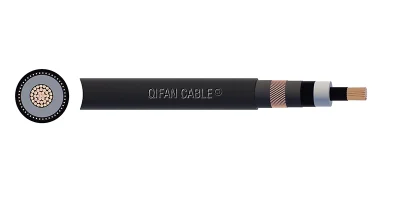
| XLPE insulated, copper tape/wire screened, PVC/PE sheathed | Copper (Cu) or Aluminum (Al) | 1 | 3.6/6(7.2)kV, 6/10 (12) kV, 8.7/15(17.5)kV 12/20 (24) kV, 18/30 (36) kV | 25 mm² to 800 mm² |
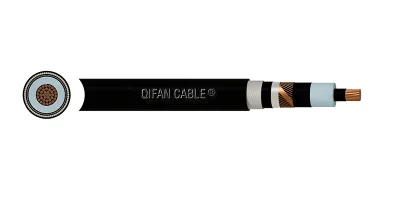
| XLPE insulated, aluminum/steel wire armoured, PVC sheathed | Copper (Cu) or Aluminum (Al) | 1 | 3.6/6(7.2)kV, 6/10 (12) kV, 8.7/15(17.5)kV 12/20 (24) kV, 18/30 (36) kV | 25 mm² to 630 mm² |
2. Three Core MV Cables (Armoured)
| Description | Conductor Material | Core Count | Voltage Levels | Size Range (Cross-section) |
|---|---|---|---|---|
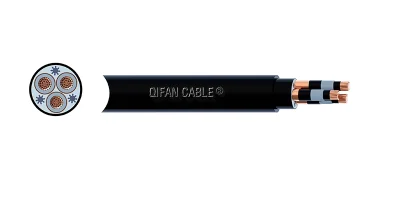
| XLPE insulated, copper tape screened, galvanized steel wire armoured, PVC/PE sheathed | Copper (Cu) or Aluminum (Al) | 3 | 3.6/6(7.2)kV, 6/10 (12) kV, 8.7/15(17.5)kV 12/20 (24) kV, 18/30 (36) kV | 25 mm² to 400 mm² |
| XLPE insulated, lead sheath (water barrier), PVC/PE sheathed | Copper (Cu) or Aluminum (Al) | 3 | 3.6/6(7.2)kV, 6/10 (12) kV, 8.7/15(17.5)kV 12/20 (24) kV, 18/30 (36) kV | 35 mm² to 500 mm² |
Typical Applications: Primary distribution networks, industrial power supply, substation feeders.
Summary Table: Core Count vs. Cross-section Range
Need help?
WhatsApp:
Email:
Leave a Message
Please provide your contact details.
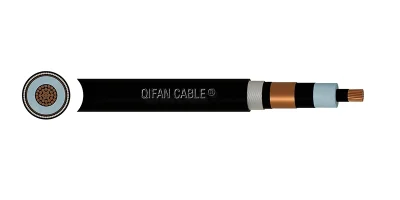
IEC 60502 Cable
FAQ
Answers To Your Most Common Questions
Find quick answers to common questions below.
Answer:
Yes. IEC 60502-2:2014+AMD1:2024 CSV introduced several important changes:
Simplified calculation of lead sheath and outer sheath thickness
Revised requirements for non-metallic sheaths (including those with semiconductor layers)
Added optional 0.1 Hz VLF (Very Low Frequency) test for post-installation testing
Added routine electrical tests for the outer sheath
New subclause on determining conductor temperature
These changes improve clarity, reduce over-engineering, and provide better field-testing options.
Answer:
Yes, but with limitations. IEC 60502-1 (LV part) explicitly allows use in DC systems if declared by the manufacturer, subject to:
Voltage ≤ 750 V to earth
Voltage ≤ 1500 V between poles
IEC 60502-2 does not explicitly cover DC operation. For medium voltage DC (MVDC) applications, additional design considerations (e.g., space charge effects in XLPE) would be required, and IEC 60502-2 alone is not sufficient.
Answer:
IEC 60502 covers thermosetting and thermoplastic extruded solid insulation materials, including:
XLPE – Cross-linked polyethylene (most common for MV)
PVC – Polyvinyl chloride (common for LV)
EPR – Ethylene propylene rubber (less common, but permitted)
The standard does not cover paper insulation (e.g., mass-impregnated cables) or gas insulated cables.
Yes, IEC 60502 cables can be highly customized to meet different installation environment requirements. While the standard establishes baseline construction, dimensions, and test requirements, it deliberately allows for design flexibility to accommodate various installation conditions
Get In Touch
Let’s Build Something
Together.
Our team of multilingual sales professionals and technical specialists are on hand to support you with your cable projects, from specification through to installation. Please use the contact details below to get in touch.
Quick Link