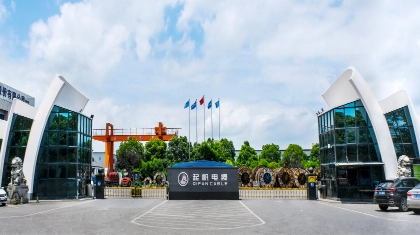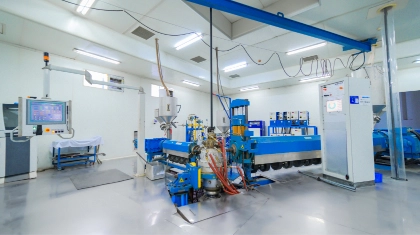
Qifan Cable is a professional low voltage cable specialist, offering a full range of low voltage cables, a dedicated testing laboratory and expert technical & regulatory support.
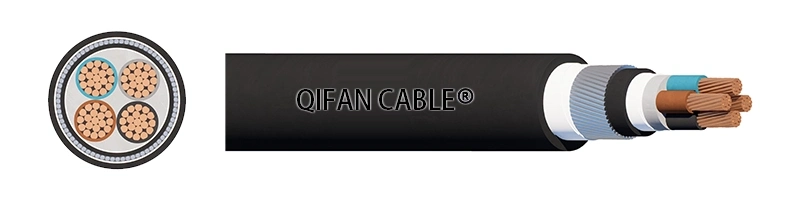
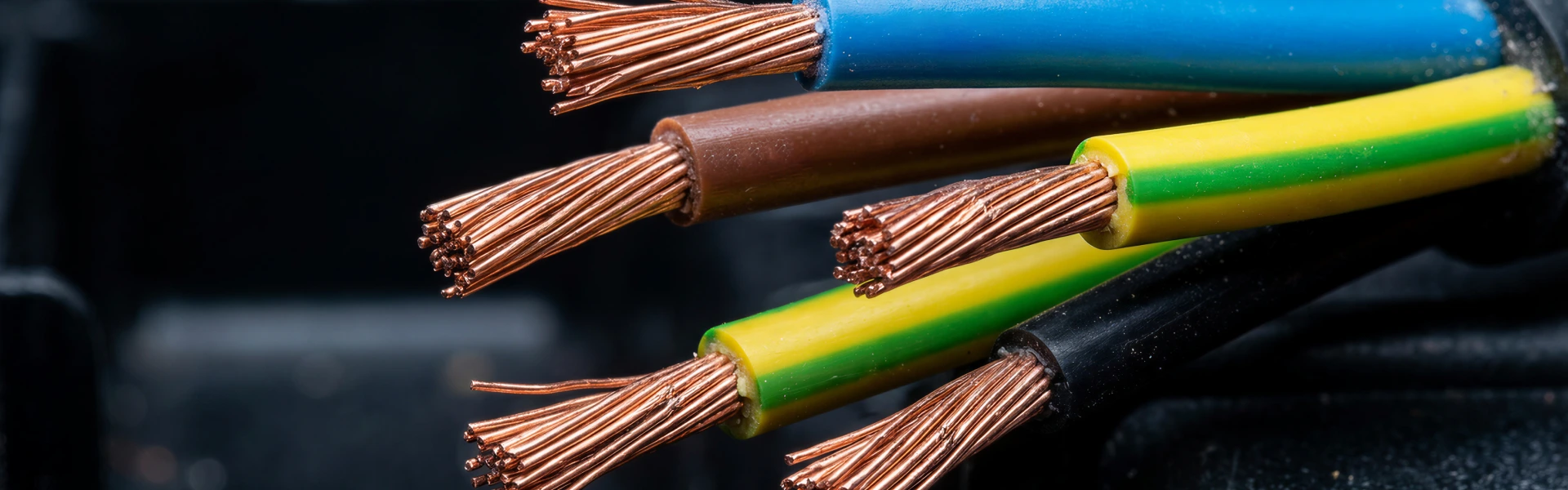
Low voltage cables come in numerous structural forms, follow multiple standard specifications and employ different material solutions. For project-specific cable selection, it is essential to weigh performance needs, installation conditions and environmental challenges, and ultimately ensure full compliance with cable standards, industry rules and regulatory requirements.
Low Voltage Cable Standards & References
These are the standards and references most used in low voltage cables – with technical datasheets for the cables also provided below.
| LV Cable Standard / Type | LV Standard Description |
| IEC 60502-1 | Cables with extruded insulation with voltage rating of 0.6/1kV for fixed installations. |
| PVC / XLPE Insulated Power Cables 0.6/1kV | Power cables with PVC or XLPE insulation, designed for general low voltage power transmission and distribution. |
| AWA / SWA / STA Armoured Power Cables 0.6/1kV | Armoured low voltage power cables providing mechanical protection. AWA (Aluminum Wire Armoured) for single-core; SWA (Steel Wire Armoured) STA (Steel Tape Armoured) for multi-core. |
| NYY / NAYY 0.6/1kV | Single or multi-core Copper (N) or Aluminium (NA) conductor, PVC insulated, PVC sheathed power cables generally in accordance with DIN VDE 0276-603. |
| N2XY / NA2XY 0.6/1kV | Single or multi-core Copper (N) or Aluminium (NA) conductor, XLPE insulated, PVC sheathed power cables generally in accordance with DIN VDE 0276-603. |
| N2XH / NA2XH 0.6/1kV | Single or multi-core Copper (N) or Aluminium (NA) conductor, XLPE insulated, halogen-free protective sheathed (LSZH) power cables with improved fire performance. |
| NYBY / NAYBY 0.6/1kV N2XBY / NA2XBY 0.6/1kV | Copper (N) or Aluminium (NA) conductor, PVC or XLPE insulated, double steel tape armoured (B), PVC sheathed low voltage power cables. |
| N2XBH / NA2XBH 0.6/1kV | Copper (N) or Aluminium (NA) conductor, XLPE insulated, double steel tape armoured (B), halogen-free protective sheathed (LSZH) power cables. |
| NYFY / NAYFY 0.6/1kV N2XFY / NA2XFY 0.6/1kV | Copper (N) or Aluminium (NA) conductor, PVC or XLPE insulated, galvanized flat steel wire armoured (F) with counter-helix steel tape, PVC sheathed cables. |
| N2XFH / NA2XFH 0.6/1kV | Copper (N) or Aluminium (NA) conductor, XLPE insulated, galvanized flat steel wire armoured (F), halogen-free protective sheathed (LSZH) cables. |
| N2XSY 0.6/1kV | Single-core Copper conductor, XLPE insulated, copper screen (S), PVC sheathed low voltage power cables. |
| U-1000 R2V | Rigid copper conductor, XLPE insulated, PVC sheathed low voltage power cables in accordance with French standard NF C 32-321. |
| RV-K / RZ1-K 0.6/1kV | Flexible copper conductor (Class 5), XLPE insulated power cables for industrial wiring. RV-K features a PVC outer sheath; RZ1-K features a halogen-free (LSZH) outer sheath. |
As a leading low voltage cable supplier, we have vast experience of advising on LV cable selection. Our technical team is available to discuss your application and to help you meet the specific requirements.
Critical Compliance Considerations
Voltage Notation: IEC uses U0/U (Um) (e.g., 450/750V, 0.6/1kV, Um=1.2kV), while North American standards typically use phase-to-phase voltage (e.g., 600V) for low voltage cables.
Insulation Materials: Low voltage cables adopt a wide range of insulation and sheath materials according to application scenarios. The mainstream options include PVC (polyvinyl chloride), XLPE (cross-linked polyethylene), EPR (ethylene propylene rubber) and LSZH (low smoke zero halogen) compounds. Relevant standards specify strict requirements on material composition, thermal performance, mechanical properties and processing techniques for different insulation types.
Testing Requirements: All standards mandate:
Electrical tests: AC voltage withstand, partial discharge, insulation resistance, conductor DC resistance
Mechanical tests: Bending, tensile strength, impact resistance, abrasion resistance
Environmental tests: Thermal aging, weathering, chemical resistance, flame retardancy, smoke density and halogen content test
Low Voltage Cable

Need help?
WhatsApp:
Email:
Leave a Message
Please provide your contact details.
FAQ
Answers To Your Most Common Questions
Find quick answers to common questions below.
Match the cable size according to load current, wiring length and ambient temperature. Undersized cables easily overheat, while overly thick cables cause unnecessary cost waste. Our technical team offers free sizing consultation.
Low voltage cables work for circuits below 1kV, covering factory automation, building power distribution, control panels, sensor instrumentation and daily commercial power supply to transmit power and control signals.
Picking a matching low voltage cable relies on aligning cable specifications with your actual operating conditions and usage purposes. You first need to confirm the load current and circuit length to choose a proper conductor cross-section, which prevents cable overheating and excessive power loss during long-term operation.
Your installation environment is another decisive factor. Standard PVC cables suit ordinary indoor workshops with low fire risks, while crowded enclosed spaces such as hospitals and metro tunnels demand LSZH cables for superior fire safety. Factories filled with motors and frequency converters need shielded cables to stabilize signal transmission against electromagnetic interference.
You should also distinguish transmission needs: power, control and signal circuits adopt cables with different core structures. If your site faces high temperature, moisture or outdoor exposure, opt for cables with weather-resistant outer jackets. Our technical specialists can analyze your project parameters and provide tailored low voltage cable recommendations if you have trouble confirming specifications.
Low voltage cables work for circuits under 1kV, used for power supply, equipment control and signal connection in buildings and factories.
You need to pick the right wire size based on current and cable length to prevent overheating. Different types serve different uses: power cables deliver electricity, multi-core control cables connect control devices, and shielded cables avoid signal interference near motors.
Choose PVC cables for common indoor areas to save cost. For public spaces like hospitals and subways, go for LSZH cables. They produce little smoke and no toxic halogen gas when burning for better fire safety. Our team can help you choose suitable cables for your projects.
Get In Touch
Let’s Build Something
Together.
Our team of multilingual sales professionals and technical specialists are on hand to support you with your cable projects, from specification through to installation. Please use the contact details below to get in touch.
Quick Link