
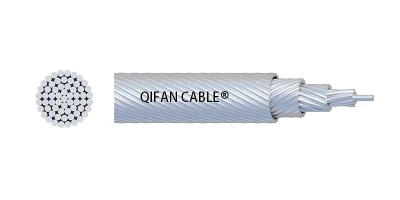
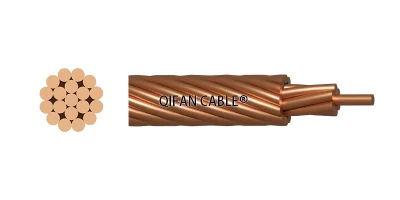
Overhead bare conductors IEC61089

Description: IEC 61089 is the standard for bare overhead stranded conductors, covering AAC, AAAC, ACSR, ACAR, and steel-reinforced variants. It unifies material specs, construction, electrical/mechanical performance, and testing to deliver safe, efficient, and used in power transmission and distribution (T&D) networks
Standard: IEC 61089
1. Scope & Core Materials
The standard applies to concentric-lay stranded conductors composed of round wires, using the following primary materials:
SA1A/SA1B/SA2: Aluminum-clad steel (for corrosion resistance).
Aluminum (A1): Hard-drawn pure aluminum (min. 99.7% purity, 1350-H19 alloy).
Aluminum Alloys (A2, A3): Heat-treated alloys for higher strength.
Steel:S1A/S1B/S2A/S3A: Zinc-coated (galvanized) steel.
2. Main Conductor Types (per IEC 61089)
2.1 AAC (All Aluminum Conductor)
Structure: Concentric layers of hard-drawn pure aluminum wires (A1).
2.2 AAAC (All Aluminum Alloy Conductor)
Structure: Stranded from high-strength aluminum alloys (A2/A3).
2.3 ACSR (Aluminum Conductor Steel Reinforced)
Structure: Galvanized steel core (S1A/S2A) + outer layers of aluminum (A1).
2.4 ACAR (Aluminum Conductor Alloy Reinforced)
Structure: Aluminum alloy core + pure aluminum outer strands.
2.5 ACSW / Steel Core Variants
Uses aluminum-clad steel (SA) cores for extreme corrosion resistance (e.g., coastal/industrial zones).
3. Specifications (per IEC 61089)
3.1 Construction
Outer diameters: Typically 6.0 mm – 45.0 mm.
Concentric lay: Wires helically stranded in concentric layers (each layer opposite direction).
Cross-sections: Nominal areas from 10 mm² to 1500 mm².
3.2 Electrical Properties
Conductivity: Standardized for each material (A1: 61% IACS).
DC Resistance: Max values defined at 20°C (e.g., ~0.0326 Ω·mm²/m for A1).
Temperature Coefficient: ~0.00360 /°C (aluminum).
3.3 Mechanical Properties
Thermal Expansion: ~23 × 10⁻⁶ /°C (aluminum).
Tensile Strength / Breaking Load: Minimum values per cross-section.
Elongation: Minimum elongation at break.
Modulus of Elasticity: Defined for layered constructions.
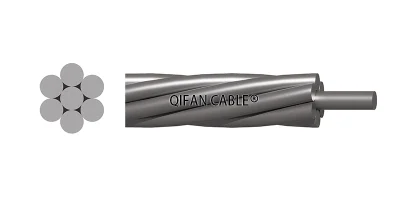
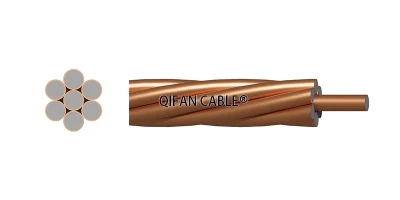
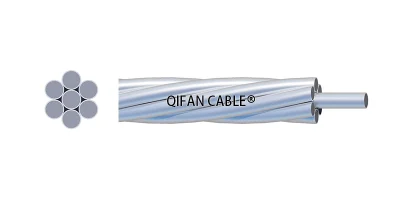
IEC61089 Cable

Need help?
WhatsApp:
Email:
Leave a Message
Please provide your contact details.
FAQ
Answers To Your Most Common Questions
Find quick answers to common questions below.
IEC 61089 is an international standard published by the International Electrotechnical Commission (IEC) that specifies the design, materials, construction, electrical/mechanical properties, and testing requirements for round wire concentric lay overhead stranded conductors. It unifies global standards for power transmission and distribution (T&D) conductors, superseding older IEC standards (60207, 60208, 60209, 60210) .
The standard applies to four primary conductor types:
AAC (All Aluminum Conductor): Pure hard-drawn aluminum strands (A1)
AAAC (All Aluminum Alloy Conductor): High-strength aluminum alloy strands (A2/A3)
ACSR (Aluminum Conductor Steel Reinforced): Aluminum outer layers + galvanized steel core (S1A/S2A)
ACAR (Aluminum Conductor Alloy Reinforced): Aluminum outer strands + aluminum alloy core .
Allowed materials include:
Aluminum: Hard-drawn pure aluminum (A1, 99.7% purity) and heat-treated aluminum alloys (A2/A3)
Steel: Zinc-coated (galvanized) steel (S1A/S1B/S2A/S3A) and aluminum-clad steel (SA1A/SA1B/SA2) for corrosion resistance .
The standard mandates strict testing for:
Electrical performance: DC resistance (at 20°C), conductivity (e.g., 61% IACS for A1 aluminum)
Mechanical properties: Tensile strength (RTS), elongation, bending resistance, creep resistance
Materials: Wire purity, coating thickness (galvanized/aluminum-clad)
Dimensions: Outer diameter, stranding pitch, lay length .
Get In Touch
Let’s Build Something
Together.
Our team of multilingual sales professionals and technical specialists are on hand to support you with your cable projects, from specification through to installation. Please use the contact details below to get in touch.
Quick Link