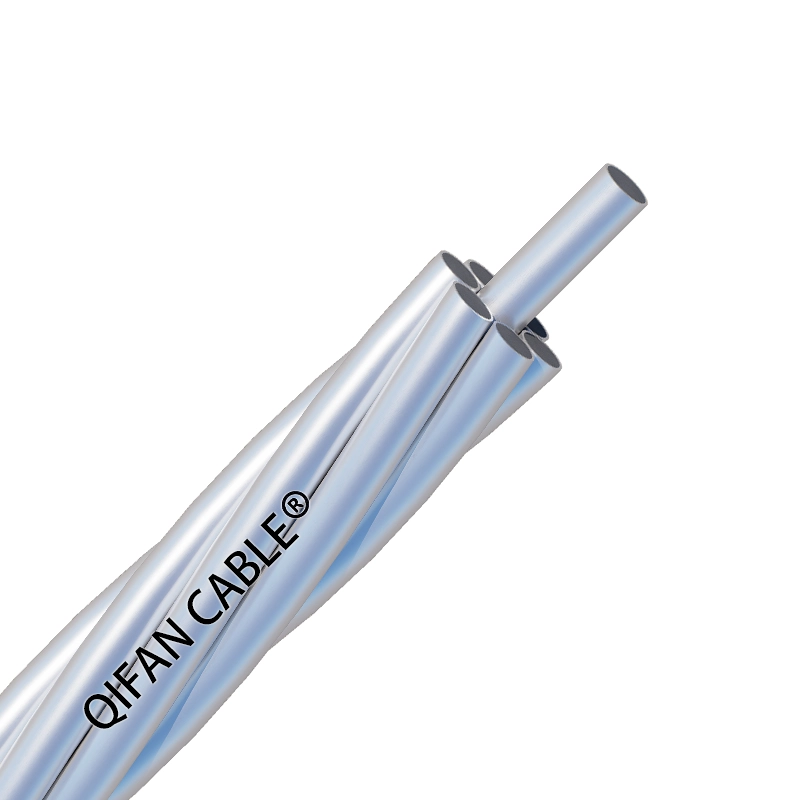
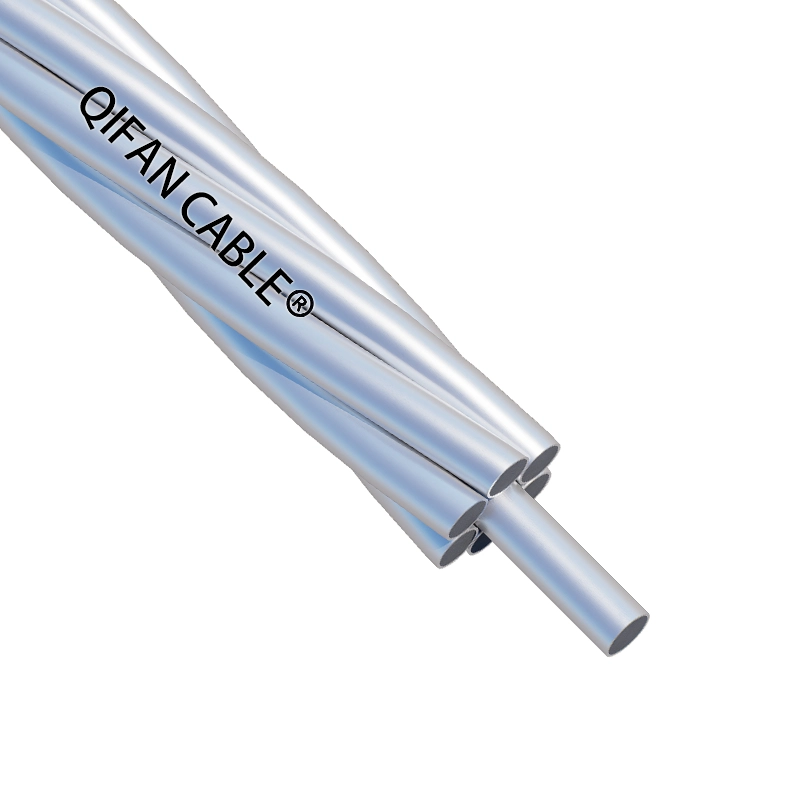
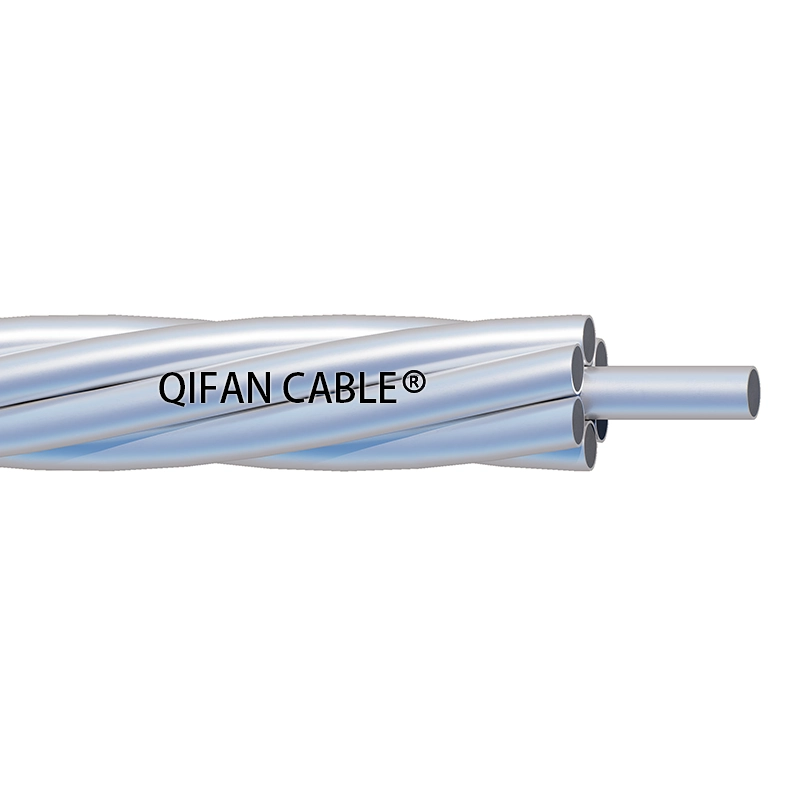
Application
Due to its excellent characteristics, this product is used extensively in the cable industry for the manufacturing of Optical Ground Wire (OPGW), conventional stranded earth wired and steel reinforced cores for phases conductors, all to be used in overheads lines. Also, it can be used in alternative applications an helical hardware for overhead lines or those where the resistance to the corrosion is an important factor.
DESCRIPTION
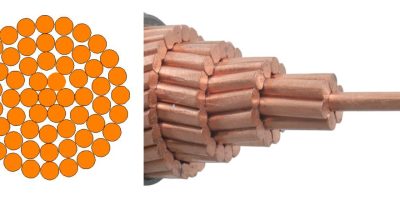
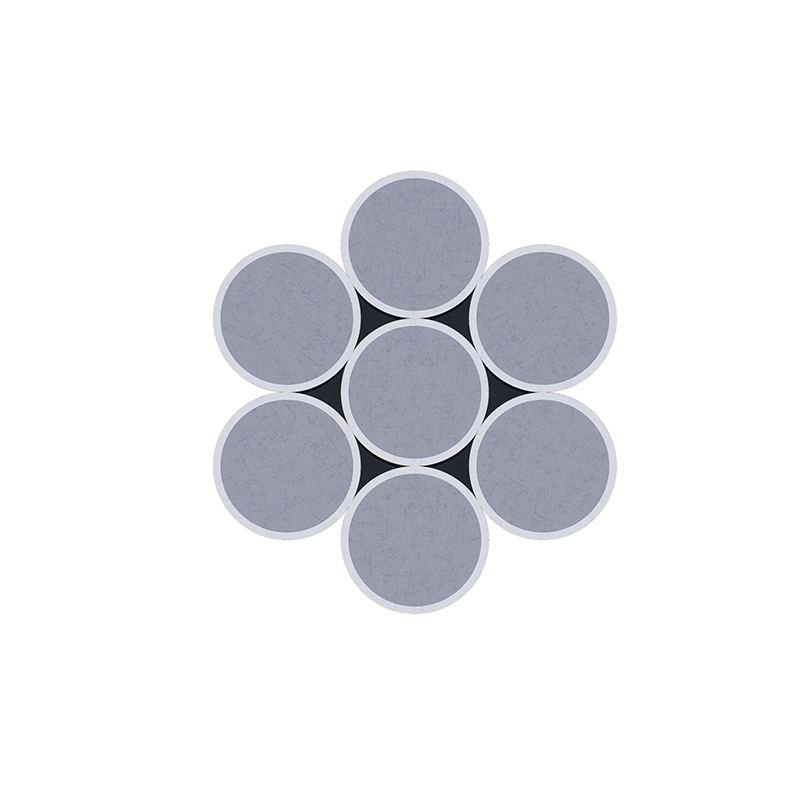
Bare concentric-lay-stranded conductors made from bare, hard-drawn, round, aluminum clad steel wires for general use of electrical purposes. Conductors are classified as follows: 14 % conductivity, 20.3 % conductivity, 27 % conductivity, 35 % conductivity, 40 % conductivity.
STANDARDS
• IEC 61089 Round Wire Concentric Lay Overhead Electrical Stranded Conductors
• ASTM B 416 Concentric-Lay-Stranded Aluminum-Clad Steel Conductors
• AS 1222.2 Steel Conductors and stays Bare Overhead Part 2:Aluminum clad (SC/AC)
Technical data
| ACS | |||||||
| Code Number | Area | No.of wires | Diameter | Weight | Rated Strengh | Max.D.C. Resistance at 20℃ | |
| Wire | Cond. | ||||||
| mm2 | mm | mm | kg/km | kN | Ω/km | ||
| 3 NO.5AWG | 50.32 | 3 | 4.62 | 9.96 | 334.1 | 54.42 | 1.699 |
| 3 NO.6AWG | 39 | 3 | 4.11 | 8.87 | 265 | 45.74 | 2.142 |
| 3 NO.7AWG | 31.65 | 3 | 3.67 | 7.9 | 210.1 | 38.36 | 2.701 |
| 3 NO.8AWG | 25.1 | 3 | 3.26 | 7.03 | 166.7 | 32.06 | 3.406 |
| 3 NO.9AWG | 19.9 | 3 | 2.91 | 6.26 | 132.2 | 25.43 | 4.294 |
| 3 NO.10AWG | 15.78 | 3 | 2.59 | 5.58 | 104.8 | 20.16 | 5.415 |
| 7 NO.5AWG | 117.4 | 7 | 4.62 | 13.9 | 781.l | 120.27 | 0.7426 |
| 7 NO.6AWG | 93.1 | 7 | 4.11 | 12.4 | 619.5 | 101.14 | 0.9198 |
| 7 NO.7AWG | 73.87 | 7 | 3.67 | 11 | 491.1 | 84.81 | 1.160O |
| 7 NO.8AWG | 58.56 | 7 | 3.26 | 9.78 | 389.6 | 70.88 | 1.463 |
| 7 NO.9AWG | 46.44 | 7 | 2.91 | 8.71 | 308.9 | 56.2 | 1.844 |
| 7 NO.10AWG | 36.83 | 7 | 2.59 | 7.76 | 245.1 | 44.58 | 2.325 |
| 7 NO.l1AWG | 29.21 | 7 | 2.3 | 6.91 | 194.4 | 35.35 | 2.932 |
| 7 NO.12AWG | 23.16 | 7 | 2.05 | 6.16 | 154.2 | 28.03 | 3.697 |
| 19 NO.5AWG | 318.7 | 19 | 4.62 | 23.1 | 2129 | 326.39 | 0.2698 |
| 19 NO.6AWG | 252.7 | 19 | 4.11 | 20.6 | 1688 | 274.55 | 0.3402 |
| 19 NO.7AWG | 200.4 | 19 | 3.67 | 18.3 | 1339 | 230.18 | 0.429 |
| 1g NO.8AWG | 158.9 | 19 | 3.26 | 16.3 | 1062 | 192.41 | 0.5409 |
| 19 NO.9AWG | 126.1 | 19 | 2.91 | 14.5 | 842 | 152.58 | 0.6821 |
| 19 NO.10AWG | 99.96 | 19 | 2.59 | 12.9 | 667.7 | 121 | 0.8601 |
| 37 NO.5AWG | 620.6 | 37 | 4.62 | 32.3 | 4170 | 635.43 | 0.1394 |
| 37 NO.6AWG | 492.2 | 37 | 4.11 | 28.8 | 3307 | 534.85 | 0.1757 |
| 37 NO.7AWG | 390.3 | 37 | 3.67 | 25.7 | 2623 | 448.09 | 0.2216 |
| 37 NO.aAWG | 309.5 | 37 | 3.26 | 22.9 | 2080 | 374.67 | 0.2794 |
| 37 NO.9AWG | 245.5 | 37 | 2.91 | 20.3 | 1649 | 279.11 | 0.3523 |
| 37 NO.10AWG | 194.7 | 37 | 2.59 | 17.9 | 1308 | 235.61 | 0.4443 |
| ACS(SC/AC) | ||||||
| Stranding and wire diameter | Approx. overall diameter | Cross-sectional area | Approx. mass per km | Calculated breaking load (CBL) | Equivalent aluminium area | Direct current resistance per km at 20℃ |
| mm | mm | mm2 | kg | kN | mm2 | Ω |
| 3/2.75 | 5.93 | 17.82 | 118 | 22.7 | 5.91 | 4.8 |
| 3/3.00 | 6.47 | 21.21 | 141 | 27 | 7.03 | 4.02 |
| 3/3.25 | 7 | 24.89 | 165 | 31.6 | 8.26 | 3.42 |
| 3/3.75 | 8.08 | 33.12 | 220 | 39.3 | 11 | 2.58 |
| 7/2.75 | 8.25 | 41.58 | 277 | 50.1 | 13.7 | 2.06 |
| 7/3.00 | 9 | 49.48 | 330 | 59.7 | 16.3 | 1.73 |
| 7/3.25 | 9.75 | 58.07 | 387 | 69.9 | 19.2 | 1.47 |
| 7/3.75 | 11.3 | 77.28 | 515 | 86.9 | 25.5 | 1.11 |
| 7/4.25 | 12.8 | 99.33 | 662 | 105 | 32.8 | 0.864 |
| 19/2.75 | 13.8 | 112.9 | 755 | 136 | 37.1 | 0.764 |
| 19/3.00 | 15 | 134.3 | 899 | 162 | 44.1 | 0.642 |
| 19/3.25 | 16.3 | 157.6 | 1060 | 189 | 51.8 | 0.545 |
| 19/3.75 | 18.8 | 209.8 | 1410 | 236 | 68.9 | 0.411 |
| 19/4.25 | 21.3 | 269.6 | 1800 | 286 | 88.6 | 0.32 |
FAQ
Aluminium Clad Steel Wire is a composite bimetallic product consisting of a high-strength steel core that is completely covered by a thick, metallurgically bonded layer of high-purity aluminum. The aluminum cladding typically accounts for a significant portion of the cross-section. By adjusting the cladding thickness, manufacturers can control the final electrical conductivity of the wire, usually ranging from 14% to 40% IACS.
Much better long-term corrosion resistance (aluminum cladding vs zinc)
Significantly higher electrical conductivity
No risk of galvanic corrosion when used alongside aluminum conductors
Better strength-to-weight ratio in many cases
This ACS wire has become a preferred solution for critical applications such as Optical Ground Wire (OPGW), the cores of high-performance conductors, and overhead grounding systems.