Qifan Cable supplies a comprehensive range of IEC 60840 standard High Voltage (HV) cable

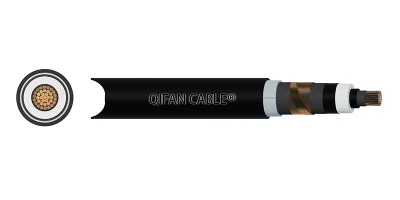
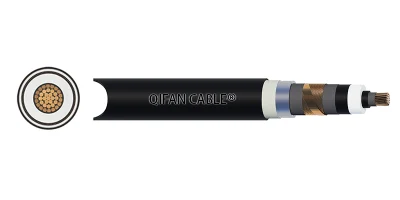
High Voltage power cables rated from 36/66kV to 127/220kV for electrical power transmission and sub-transmission networks. Advanced XLPE insulation with metallic sheath for national grid connections, renewable energy projects, and large-scale industrial power infrastructure.
We provide HV cable solutions for underground power distribution designed to be application-led and project specific. Requirements may include unusual quantities or lengths, short production lead-times, and technically challenging constructions.
Underground HV Cable Specifications
High voltage cables to International Standard IEC 60840 are designed for the primary distribution of power on networks with a voltage rating from 45kV to 132kV.
These cables can be laid in trenches across extended distances to connect substations or primary power generation sites.
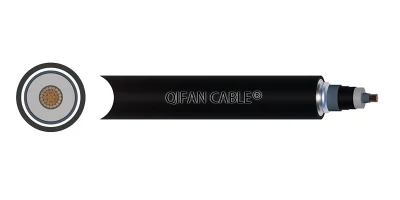
A high density polyethylene (HDPE) is used as standard and offers a compromise between abrasion resistance and flexibility, however various other options, including MDPE, PVC and LSZH materials are available on request.
Subject to the design parameters and installation environment, the metallic screen size and material types can be adapted to best suit the installation bonding arrangements. Additional constructional layers including armour (wires or corrugated tapes) can also be applied.
HV cables are suitable for installations providing mechanical protection to the cable. All variants of IEC 60840 have waterblocking tape to help prevent water ingress and ensure that should the HV cable be damaged, the repair lengths and associated works are kept to a minimum.
HV Voltage Designations and their applications
| Voltage Designation (Uo/U) | Maximum System Voltage (Um) | Primary Applications |
| 26/45 kV | 52 kV | Primary medium-to-high voltage distribution networks, industrial plant feeds, and regional primary substations. |
| 36/60 kV | 72.5 kV | Sub-transmission systems, urban electrical grid interconnections, and renewable energy connections (e.g. wind farm arrays). |
| 38/66 kV | 72.5 kV | Primary sub-transmission and inter-grid distribution networks. |
| 64/110 kV | 123 kV | Main high-voltage transmission lines, bulk city supply, and major grid substations. |
| 76/132 kV | 145 kV | Regional HV transmission, overhead-to-underground transitions, and metropolitan bulk power delivery. |
| 87/150 kV | 170 kV | High-capacity transmission loops, inter-substation links, and heavy industrial grid supply. |
| 127/220 kV | 252 kV | Regional high-capacity main transmission trunk lines, inter-provincial grid connections and large power plant outlet circuits. |
Advantages of buried XLPE insulated HV Cables
Excellent electrical insulation performance
XLPE material features high dielectric strength, low dielectric loss and stable insulation property under high voltage. It effectively avoids leakage current and breakdown risks for underground power transmission.
Superior mechanical & environmental adaptability for direct burial
Cross-linked polyethylene has great tensile strength, crack resistance and water-blocking capacity. Buried cables can withstand soil extrusion, ground settlement, underground moisture and chemical corrosion from soil.
Safe operation without occupied ground space
Being buried underground eliminates overhead wire risks such as lightning strikes, wind damage, external collision and tree interference. No above-ground corridor occupation saves land resources and beautifies urban landscapes.
Long service life & low maintenance cost
XLPE insulation resists thermal ageing under long-term load operation. Once buried and laid properly, HV XLPE cables require minimal regular inspection and maintenance compared with overhead lines, reducing long-term operating expenditure.
Need help?
WhatsApp:
Email:
Leave a Message
Please provide your contact details.
FAQ
Answers To Your Most Common Questions
Find quick answers to common questions below.
High voltage produces intense, uneven electric fields inside cables. Extra thick insulation, double inner/outer conductive shielding, metal waterproof sheaths, stress buffer layers and armor are required to avoid partial discharge, insulation breakdown, water tree aging and mechanical damage, which low-voltage cables do not need.
U₀ stands for the rated phase-to-ground voltage of the cable insulation; U is the rated line-to-line system voltage. For 127/220kV cable, the insulation withstands 127kV to ground, and it matches a 220kV nominal power grid.
They are applied to medium-to-high voltage primary distribution networks, power supply feeders for large industrial plants, and incoming/outgoing lines of regional primary substations.
The corresponding maximum system voltage Um is 252kV, complying with IEC standard voltage series, consistent with the matching rule of 64/110kV cable to 123kV maximum system voltage.
Two core purposes: 1) Uniformly constrain internal electric fields to suppress partial discharge; 2) Form a fully sealed waterproof barrier. Water vapor penetrating insulation will form water trees under high electric fields, leading to permanent insulation failure and cable breakdown.
Get In Touch
Let’s Build Something
Together.
Our team of multilingual sales professionals and technical specialists are on hand to support you with your cable projects, from specification through to installation. Please use the contact details below to get in touch.
Quick Link