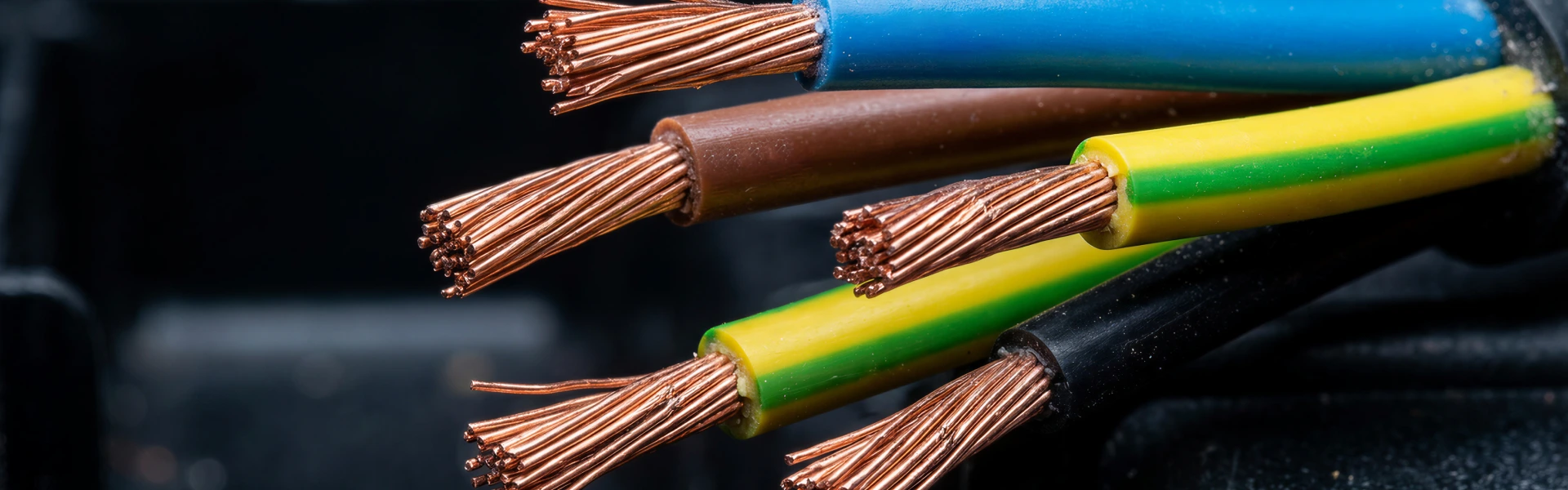
Overhead Line wires, whether bare conductors or insulated cables, provide an aerial route for the transmission and distribution of power.
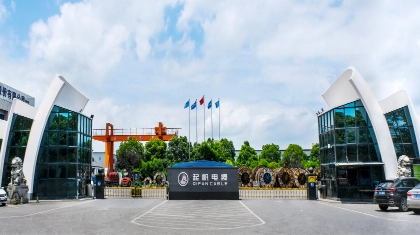
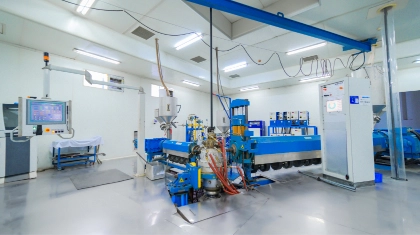
Qifan Cable is a professional overhead conductor specialist, offering a full range of overhead conductors, a dedicated testing laboratory and expert technical & regulatory support.
Ideal for long-distance power transmission and high-clearance safety, overhead lines (also known as aerial conductors) are the go-to solution for challenging terrains. Selecting the perfect cable specification depends on three key factors: the span of distance, environmental and weather conditions, and the installation location.
Overhead Line Manufacturing Specifications
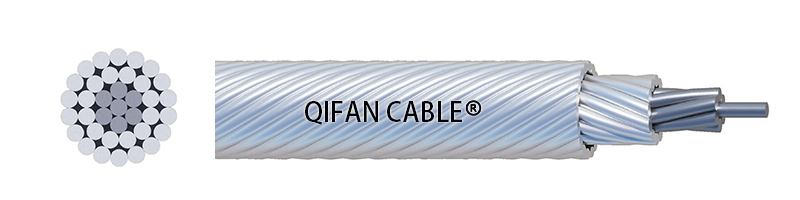
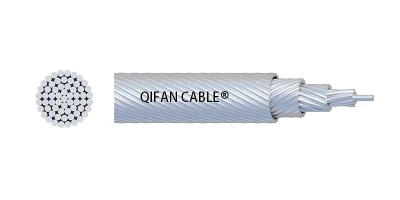
The main classifications of bare overhead conductors include AAC (All Aluminium Conductor), AAAC (All Aluminium Alloy Conductor), and ACSR (Aluminium Conductor Steel Reinforced). Expanding on these core designs to meet diverse mechanical and electrical requirements, we also supply:
- ACAR (Aluminum Conductor Aluminum Alloy Reinforced), which blends the lightweight properties of aluminium with the enhanced strength of alloy reinforcement.
- AACSR (Aluminum Alloy Conductor Steel Reinforced), engineered specifically for applications demanding extremely high tensile strength and minimal sag over longer spans.
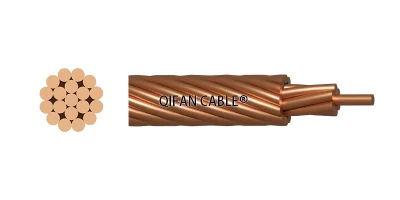
- HDBC (Hard Drawn Bare Copper), offering premium electrical conductivity and superior wear resistance for high-performance transmission.
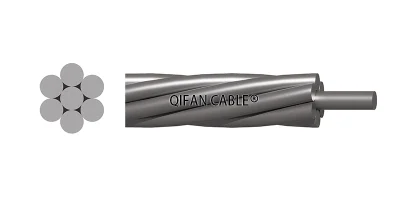
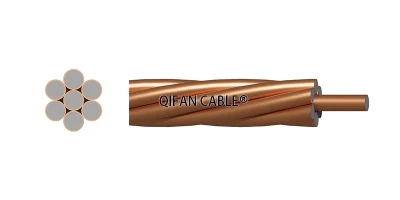
For structural support and ground shielding, our range features high-durability steel wire options, including ACS (Aluminum Clad Steel Wire), CCS (Copper Clad Steel Wire), and GSW (Galvanized Steel Wire), each manufactured to withstand harsh environmental tension.
The primary advantages of our bare conductor portfolio lie in their high strength-to-weight ratios and exceptional corrosion resistance. These overhead lines are manufactured in accordance with leading international standards—such as ASTM, IEC, DIN, and BS—ensuring reliable high-voltage and extra-high-voltage transmission across the most challenging geographical terrains.
Also within the family of Overhead Lines are insulated and bundled cable solutions designed for safer, low-to-medium voltage distribution:
- Aerial Bunched Cables (ABC) and MV ABC Cables (Medium Voltage Aerial Bunched Cables), which bundle insulated single cores together. Medium voltage variants typically feature an outer sheath and a steel wire support core for reliable pole-to-pole spans.
- Service Drop Cables, commonly specified for secondary overhead service lines from the pole-mounted transformer to the user’s premises.
- Spacer Cables, ideal for tight spaces and areas with dense vegetation, utilizing space-saving insulated configurations to prevent phase-to-phase short circuits.
These insulated cable options provide a vital protective barrier against environmental hazards, accidental contact, and short circuits, making them the preferred choice for municipal street lighting, construction site power, and forestry-adjacent grid networks.
Our overhead line products and aerial cables are manufactured to meet rigorous national and international standards, including BS, NFC, AS/NZS, and IEC specifications.
For support with product specifications, custom cable sizing, or suitability advice for your specific project, please talk to our technical team today.
Need help?
WhatsApp:
Email:
Leave a Message
Please provide your contact details.
FAQ
Answers To Your Most Common Questions
Find quick answers to common questions below.
Overhead conductors are uninsulated cables designed to carry electrical power over long distances, engineered to withstand mechanical stress, wind, ice, and temperature fluctuations. Aluminium has largely replaced copper due to its advantages in cost, weight, and strength.
The four primary types of overhead conductors include:
AAC (All Aluminium Conductor): Consists of stranded electrical-grade aluminium offering ~61% IACS conductivity. It has lower mechanical strength, making it suitable mainly for shorter urban distribution spans.
AAAC (All Aluminium Alloy Conductor): Made of high-strength 6201 aluminium alloy with ~52.5% IACS conductivity. It is highly favored in coastal areas due to its excellent corrosion resistance.
ACSR (Aluminium Conductor Steel Reinforced): Features aluminium strands wrapped over a steel core. The steel core provides exceptional mechanical strength and reduces sag over long spans.
ACAR (Aluminium Conductor Alloy Reinforced): Combines aluminium strands over a high-strength alloy core. It offers superior mechanical and electrical properties compared to ACSR for both transmission and distribution.
Common choices include ACSR (aluminum conductor steel reinforced), AAC, and AAAC, selected based on voltage, span, and environmental/mechanical demands.
Choosing the right types of overhead line conductors for your project requires balancing electrical load, mechanical strength, environmental conditions, and cost.
Understand voltage/current: Higher demands require larger cross-sections and conductivity; use ACSR, AAAC, or AAC.
Assess environment: Coastal corrosion favors AAAC/coated ACSR; mountains need ACSR/gap-type for wind/ice.
Check efficiency: Lower resistance reduces losses; aluminum is often preferred over copper.
Verify sag/tension: Conductors must withstand weight, wind, ice; run sag-tension calculations.
Compare lifecycle cost: Account for maintenance, losses, and decades of ROI—not only initial price.
Meet compliance: Confirm IEC/ASTM/GB/T standards with certified suppliers.
High-voltage transmission lines—particularly those operating above 220 kV—often suffer from significant corona loss and electromagnetic interference (EMI) when relying on a single conductor per phase. To overcome these performance bottlenecks, power utilities utilize bundled conductors.
Mitigates Corona Discharge & EMI: Single conductors create intense electric field gradients that ionize the surrounding air. This causes substantial corona power loss and generates EMI that disrupts nearby communication networks.
Lowers Surface Electric Field Intensity: By grouping two or more sub-conductors per phase using precision spacers, bundling effectively increases the conductor’s overall radius, dramatically reducing corona onset and severity.
Excels in Harsh Environments: This design offers superior reliability in high-moisture or heavily polluted atmospheres, where the risk of corona discharge is highest.
Decreases Inductive Reactance: Bundling expands the Geometric Mean Radius (GMR) of the phase conductor. This lowers inductive reactance, minimizes reactive power drop, and significantly improves voltage regulation and power transfer capability.
Reduces Skin Effect & AC Losses: Splitting the current across smaller sub-conductors mitigates the skin effect, reducing total AC resistance and preventing excessive conductor temperature rise.
When to Choose ABC Cable?
Urban and residential areas with trees, buildings, and high foot traffic
Rural electrification projects where safety is a top priority
Temporary or emergency power setups
Areas with high storm frequency where insulation can prevent outages
When to Choose Bare Conductors?
Long-distance transmission lines over wide-open terrain
Projects with strict budget constraints and fewer safety risks
High-voltage infrastructure where insulation is handled by spacing and clearance
Get In Touch
Let’s Build Something
Together.
Our team of multilingual sales professionals and technical specialists are on hand to support you with your cable projects, from specification through to installation. Please use the contact details below to get in touch.
Quick Link