Bonding Conductor for Shielded Cables (Optional)
Shielded and Concentric Neutral Power Cables Rated 5-46 kV

1. Standard No: CSA C68.3
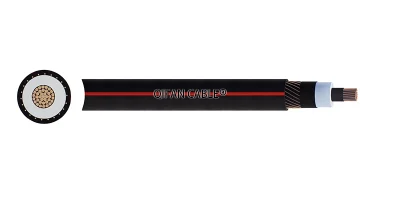
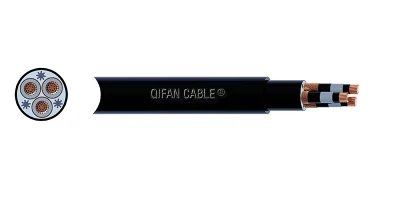
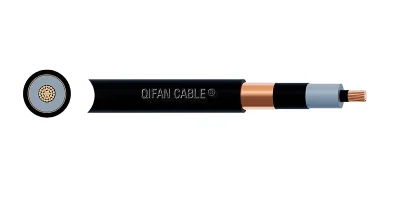
This Standard applies to the materials, construction, and testing of one- to four-conductor shielded and single-conductor concentric neutral cables incorporating cross-linked polyethylene or ethylene-propylene rubber insulation with optional thermoplastic or thermoset jacket and optional metal sheath or armour. These cables are intended for transmission and distribution of electrical energy for use either indoors or outdoors.
This Standard applies to power cables capable of continuous operation at a maximum conductor temperature of 90EC for cross-linked polyethylene-insulated cables and 90E or 105EC for ethylene-propylene rubber insulated cables.
2. Voltage Ratings:
This Standard applies to cables rated 5-46 kV with both 100% and 133% insulation levels.
- Voltage Rating: 5 kV through 46 kV (phase-to-phase).
- Core Construction: one- to four-conductor shielded and single-conductor concentric neutral cables。
- Application Environments: Suitable for wet, dry, direct burial, duct, or sunlight-resistant outdoor installations, primarily for power distribution.
3. Insulation Materials:
CSA C68.3 has three primary insulation materials, each offering different levels of electrical performance, especially regarding water tree resistance:
- Cross-linked Polyethylene – Standard XLPE with excellent electrical and thermal-mechanical properties.
- Ethylene Propylene Rubber – EPR, offering good flexibility and heat resistance.
4. Cable Construction:
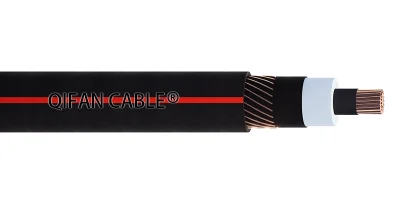
According to CSA C68.3-97, the cable construction consists of the following components, arranged from the inside to the outside. This standard applies to 1 to 4-conductor shielded cables and single-conductor concentric neutral cables.
📐 Standard Cable Construction Layers
| Layer | Component (Standard Clause) | Key Requirements & Description |
|---|---|---|
| 1 | Conductor (4.1) | Made of copper or 1350 aluminum. Can be compacted or non-compacted round, shaped, or bunched stranded conductor. |
| 2 | Conductor Shield (4.2) | Extruded semi-conducting layer that provides a smooth electrical surface for the conductor. |
| 3 | Insulation (4.3) | Material is Cross-linked Polyethylene (XLPE) or Ethylene Propylene Rubber (EPR). The standard specifies clear requirements for insulation thickness and concentricity. |
| 4 | Insulation Shield (4.4) | Consists of a semi-conducting layer and a metallic shield layer. |
| 5 | Metallic Shield | The shielding structure depends on the cable type: – Shielded Cable: A coated or uncoated copper tape,coated or uncoated copper wires,copper wire+copper tape,Longitudinally applied corrugated tape shield or metallic sheath. – Concentric Neutral Cable: The neutral conductors are spirally wound uniformly around the outside of the insulation shield. |
| 6 | Fillers & Binders (4.6) | Used in multi-conductor cables to fill interstices, making the cable round, and secured with binder tape. |
| 7 | Jacket (4.7) | Optional thermoplastic or thermoset material (e.g., PVC) that provides additional mechanical and environmental protection. |
| 8 | Metallic Covering (4.8) | Optional component. Provides a higher level of protection, such as Corrugated Aluminum Sheath,,Lead Sheath,Interlocked Armour or Steel Wire Armour (SWA) |
Need help?
WhatsApp:
Email:
Leave a Message
Please provide your contact details.
CSA C68.3 Cable

FAQ
Answers To Your Most Common Questions
Find quick answers to common questions below.
Different insulation levels have different insulation thickness, 133% insulation thickness is more thick than 100%.
The insulation material can be XLPE, EPR.
Divided into four categories based on softness: 1, 2, 5, and 6:
Class 1: Solid conductor
Class 2: Twisted hard conductor
Class 5, Class 6: Soft conductor (multi strand thin copper wire)
The neutral concentric wire have full neutral, 1/3,1/6 1/12.
Get In Touch
Let’s Build Something
Together.
Our team of multilingual sales professionals and technical specialists are on hand to support you with your cable projects, from specification through to installation. Please use the contact details below to get in touch.
Quick Link